
Buying guide
Best Coffee Machines for Small Kitchens: How to Choose Without Losing Worktop Space
How to measure your space, compare compact brewing styles and choose a coffee setup that fits a small kitchen and your routine.
17 October 2026 · 11 min read
A great home coffee routine does not need a huge kitchen. Whether you live in a small flat, share a compact kitchen or simply want to keep your worktops clear, the right coffee setup can deliver the drinks you enjoy without taking over the room.
The trick is to look beyond a machine’s headline width. Height, depth, water-tank access, space for mugs and room to clean it can all affect whether a machine works well in everyday life. A compact machine that is awkward to refill may become more frustrating than a slightly larger one with sensible access.
This guide explains how to measure your space, compare different brewing styles and choose a coffee setup that suits your kitchen and your routine.
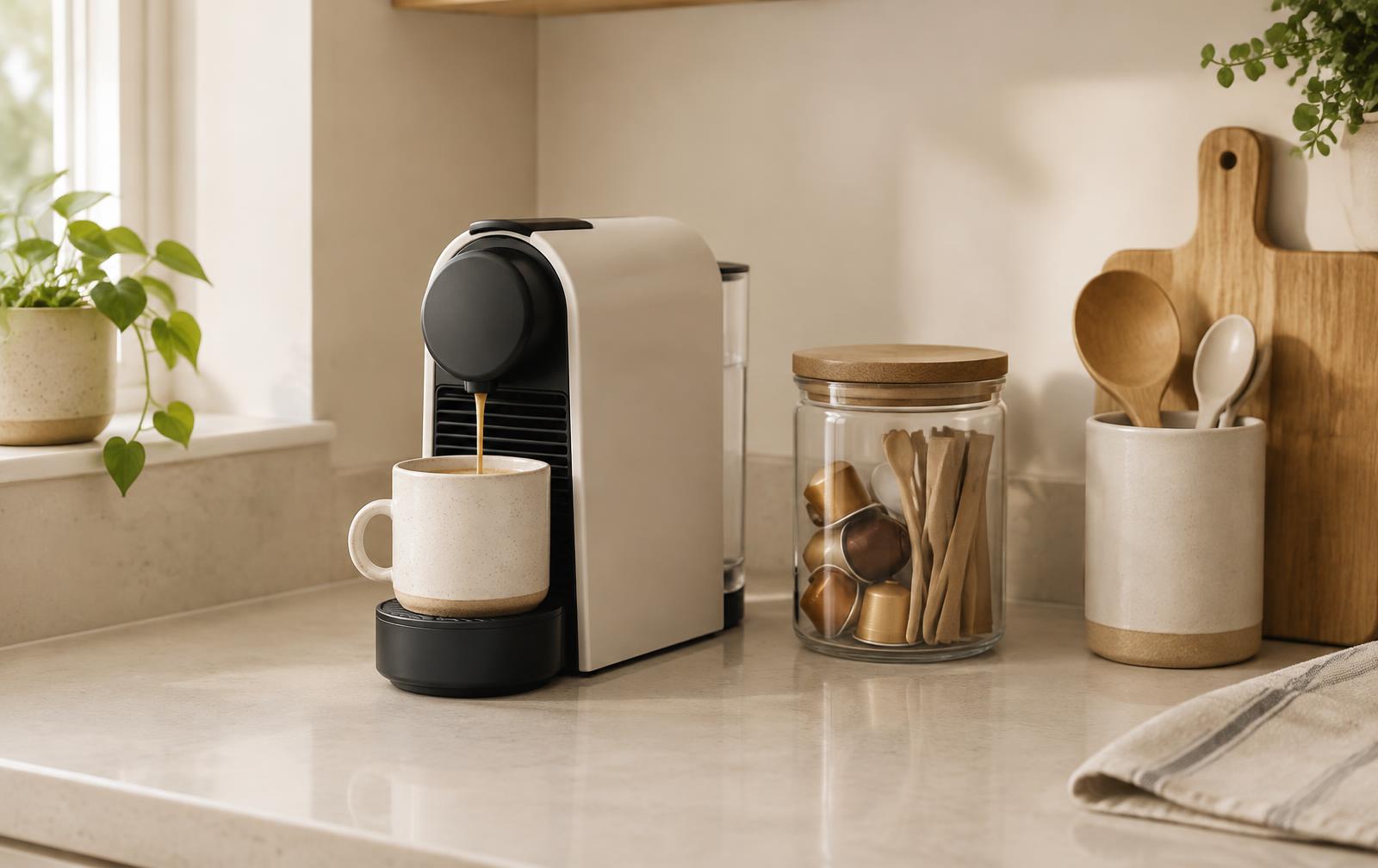
Start With Your Available Space
Before comparing features, decide where the machine will live. A spot that looks suitable when empty may be difficult to use once you account for cupboard doors, sockets, splashbacks and the space needed to fill the machine.
Think about how you use the kitchen throughout the day. Will the coffee machine block a frequently used work area? Does it sit beneath a cupboard? Is there a nearby socket that can be reached safely without stretching a cable across the sink or hob?
A little planning now can prevent a daily nuisance later.
1. Measure the Space You Actually Have
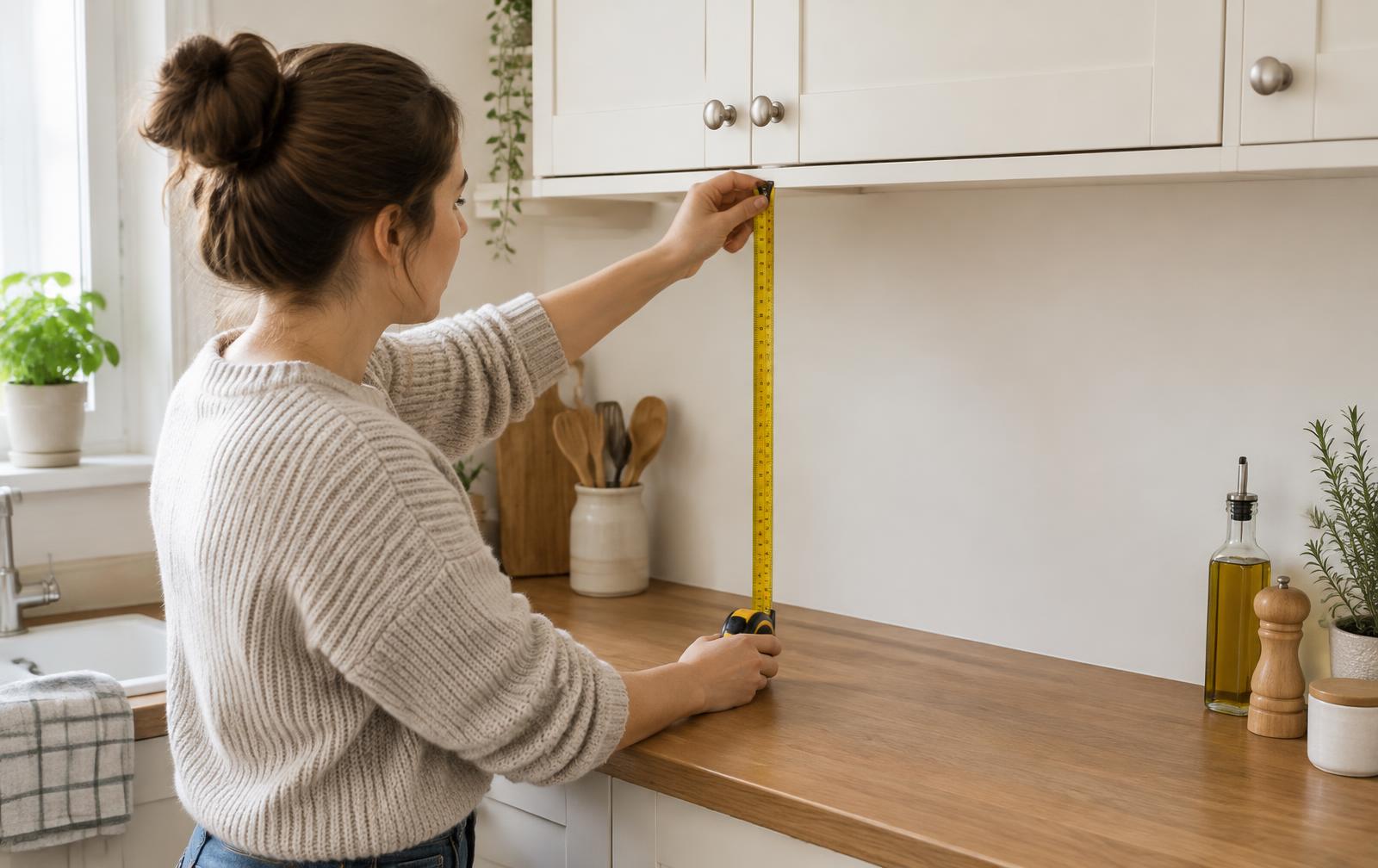
Measure the available width, depth and height of the intended location. Do not rely on a rough visual estimate, especially if the machine will sit beneath wall cupboards.
Check the manufacturer's stated height, width and depth, plus any clearance requirements in the manual. Depending on the design, a machine may need room above it to open a bean hopper or lift out a tank, or space at the side or front to access removable parts. Do not apply one clearance figure to every model.
Use this simple checklist before buying:
- Width: How much uninterrupted worktop can the machine occupy?
- Depth: Will it leave enough space at the front for a mug and at the back for cables or ventilation?
- Height: Can you open the lid, add beans or remove the water tank beneath your cupboards?
- Access: Can you lift out the drip tray and grounds container without moving other items?
- Power: Is there a suitable socket nearby, with the cable routed safely?
- Movement: Can you move the machine when needed for cleaning without clearing half the worktop?
Remember that the machine’s dimensions are only the starting point. The space required to use and maintain it comfortably is just as important.
2. Compare the Full Footprint, Not Just Width
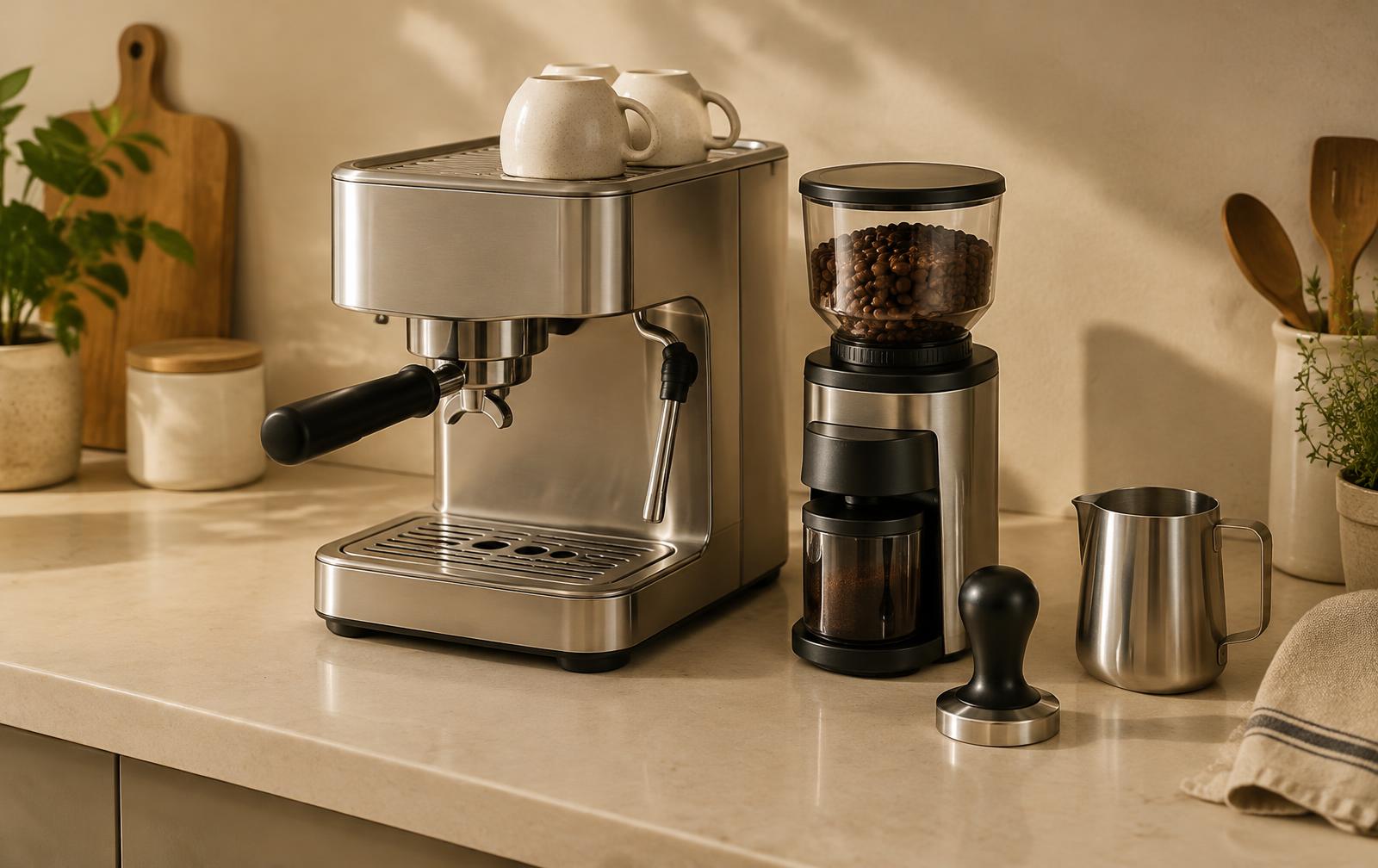
A machine may look compact in a product photograph but require extra equipment around it. This is especially relevant if you are comparing a manual espresso setup with an all-in-one machine.
A bean-to-cup machine usually combines the grinder and brewing system in one appliance, which can reduce the number of separate items on the worktop. Its actual footprint and access needs vary by model, so check the dimensions and the way its tank, hopper and waste container are removed.
A manual espresso machine can have a smaller body, but you may also need a grinder, tamper, knock box, scales and a milk jug. You do not necessarily need every accessory, but they should be included in your space plan if you expect to use them.
A cafetière or pour-over setup can be stored in a cupboard between uses, making it an option for kitchens where permanent worktop space is scarce. A capsule machine often keeps the process compact, though you will need somewhere to store capsules.
Practical tip: Mark out the machine’s footprint on the worktop using paper or removable tape. Then place a mug in front and imagine opening every lid, tank and tray. This simple test can reveal problems before you buy.
3. Choose a Brewing Style That Fits Your Routine
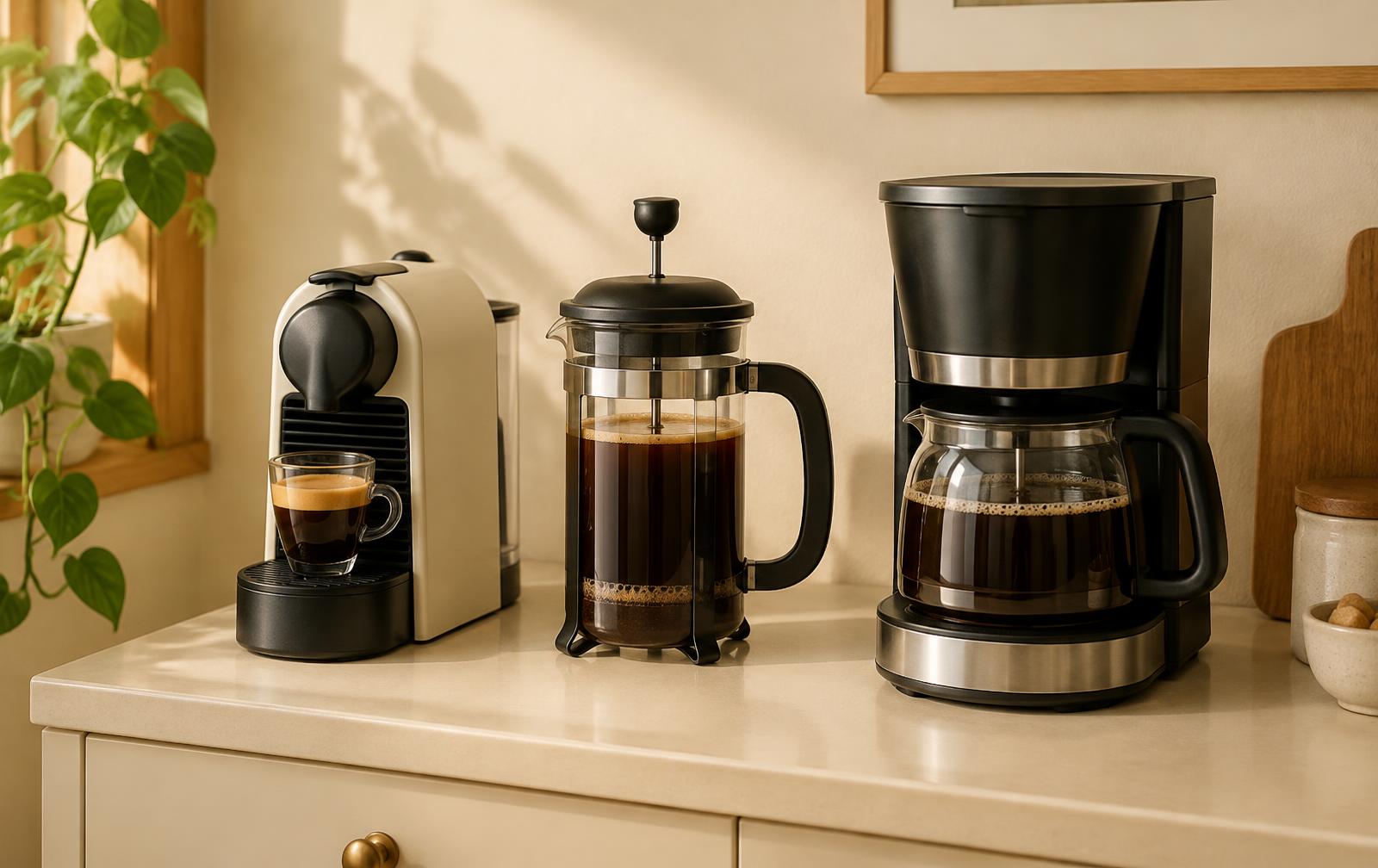
The best space-saving option depends on the coffee you drink and how much preparation you want to do.
Capsule or pod machines
Some capsule machines are compact and need little extra equipment, but size varies across models and capsule systems. Compare actual dimensions and access requirements rather than assuming every capsule machine is small. You will need storage for compatible capsules and enough room to empty the used-capsule container and drip tray.
Check the machine’s height and water-tank position. A tank that lifts upwards may be awkward beneath a low cupboard, while a front-access tank may be easier to manage in a tight space.
Filter coffee makers
A compact filter machine can be useful if you prefer a longer coffee or want to make several cups in one brew. Consider the space needed for the carafe, filter basket and water reservoir. Some parts may be easy to store in a cupboard when not in use.
If you only make one cup at a time, check whether the machine’s minimum brew quantity suits you and whether the carafe or cup arrangement fits your worktop.
Bean-to-cup machines
Bean-to-cup machines combine grinding and brewing, so you do not need a separate grinder. They can suit people who want freshly ground coffee with limited preparation, but the integrated design can make them taller or deeper than expected.
Look carefully at how you refill the beans and water, empty the grounds container and remove the drip tray. These everyday actions matter more than a compact-looking photograph.
Manual espresso machines
Manual espresso machines can appeal to people who enjoy a hands-on coffee routine. However, the complete setup may need more space than the machine alone suggests, particularly if you use a separate grinder and milk-steaming accessories.
If worktop space is limited, consider whether you can store some accessories in a drawer and bring them out only when needed.
Cafetière and pour-over equipment
If you do not need an electric machine, a cafetière or pour-over brewer can be a compact, flexible alternative. The equipment can often be stored away after use, although you will need a kettle and a place to prepare the coffee.
These options may not offer the same automation as a dedicated machine, but they can work well where clear worktops are a priority.
4. Think About Water, Beans and Daily Access
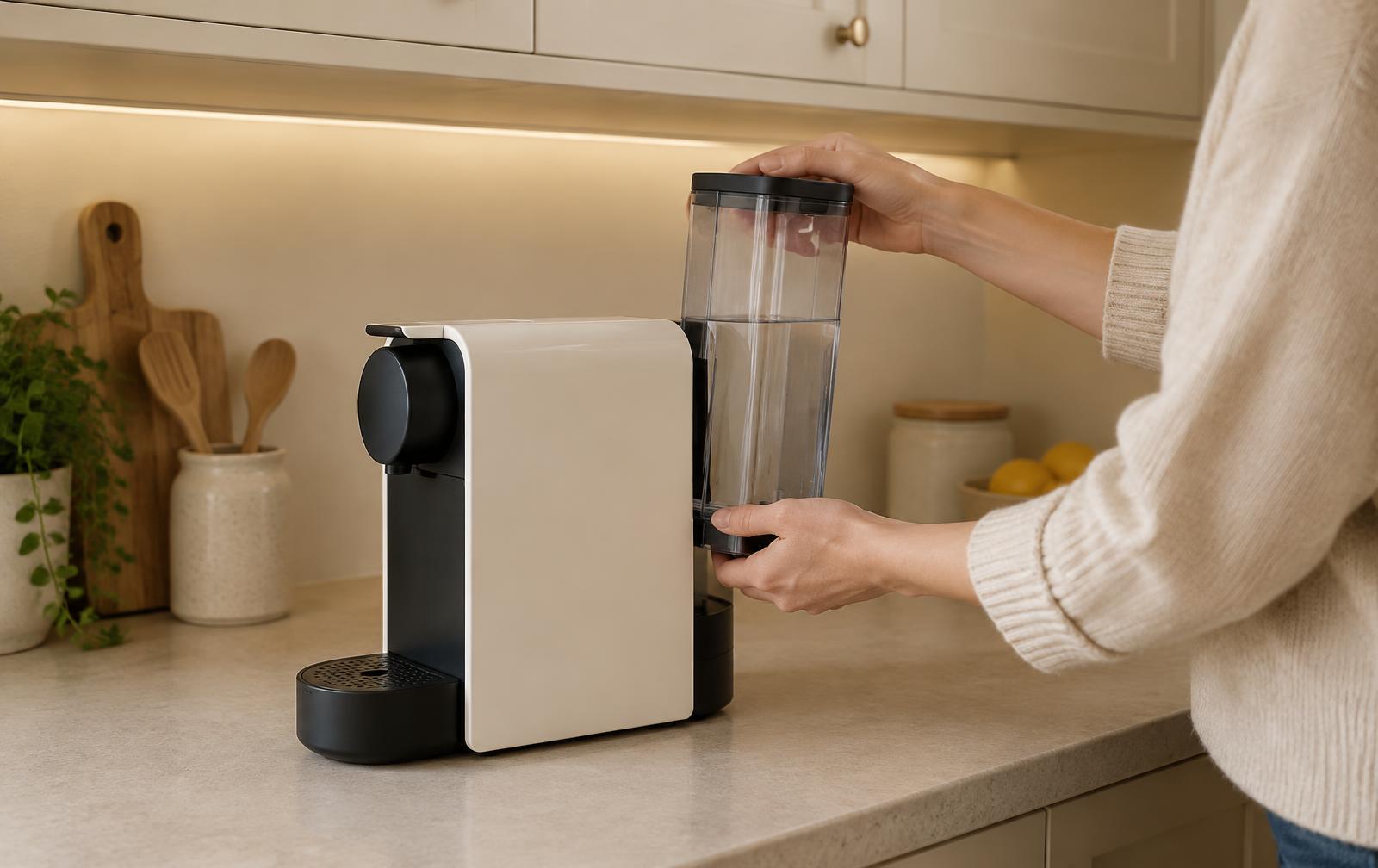
A coffee machine is only convenient if you can use it without repeatedly rearranging the kitchen.
Water-tank access is one of the most easily overlooked details. A tank that needs to be lifted vertically may be difficult to remove under a cupboard. A front-loading or side-access design may fit your layout better, depending on the kitchen.
Bean-to-cup machines need access to the bean hopper and used-grounds container. Capsule machines need somewhere to keep capsules and a way to empty the used-capsule bin. Filter machines need room to add water and coffee, and to lift out the basket or carafe.
Also think about mugs, spoons, scales and cleaning products. If everything has to live beside the machine, the area can quickly become cluttered. A nearby drawer or cupboard can make a small setup feel much more organised.
5. Make Cleaning Easy in a Tight Space
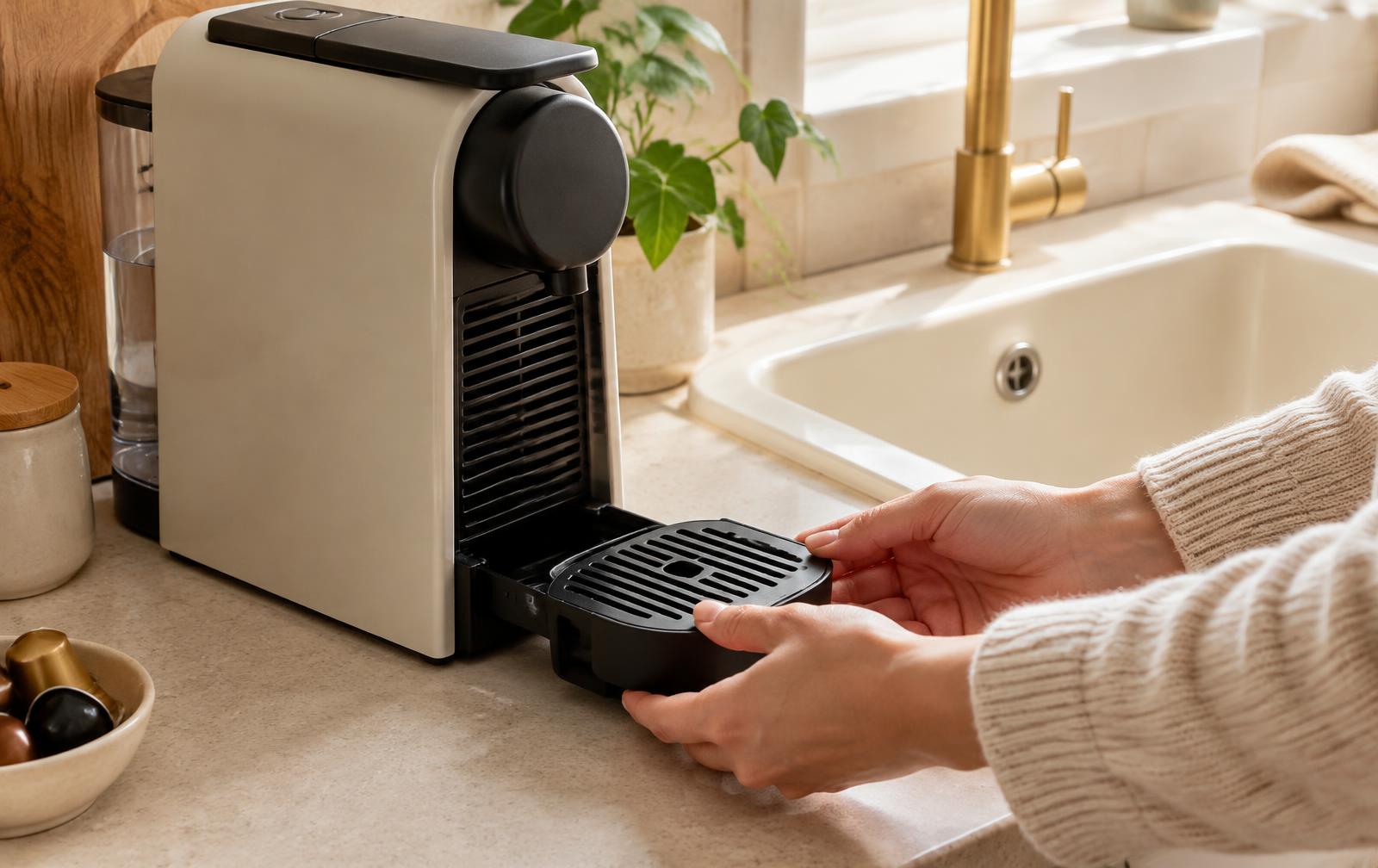
Cleaning is part of owning any coffee machine. In a small kitchen, the challenge is having enough room to remove parts and rinse them without splashing the worktop or blocking the sink.
Check how the drip tray, water tank, grounds container, filter basket or brewing unit are removed. Can you lift them out without moving the machine? Is there enough room to place them beside the sink? Does the machine need a clear area for a cleaning cycle?
Milk systems add another consideration. If you regularly make lattes or cappuccinos, check the cleaning routine for the milk carafe, tubes or steam wand. An automatic milk system may reduce preparation time, but it still needs appropriate cleaning.
Before buying, read the manufacturer’s cleaning and descaling instructions. Choose a setup whose maintenance routine feels realistic for your household.
6. Consider Noise, Steam and Where You Brew
In a small kitchen, the machine’s location can matter as much as its size. A grinder may be noisy, particularly early in the morning, while steam and hot water need to be directed away from cupboards, walls and other items.
Keep the machine on a stable, level surface and follow the manufacturer’s instructions for ventilation and clearance. Avoid placing it where the cable crosses a busy walkway or where hot drinks need to be carried past children or pets.
If you work from home or share a living space with the kitchen, consider when you make coffee and whether grinder noise might disturb others. A simpler brewing method may suit your routine better than a larger setup with more steps.
Small-Kitchen Coffee Setups: At a Glance
| Setup | Worktop needs | Main advantage | Main trade-off |
|---|---|---|---|
| Capsule machine | Usually a simple footprint plus capsule storage | Quick, low-effort single cups | Compatible capsules and used-capsule disposal |
| Filter coffee maker | Room for machine, carafe and water access | Useful for longer coffee or several cups | Takes space during brewing and cleaning |
| Bean-to-cup machine | One appliance, but check height and depth | Integrated grinder and brewing | Access needed for beans, water and grounds |
| Manual espresso setup | Machine plus any grinder and accessories | Hands-on control over preparation | Accessories can spread across the worktop |
| Cafetière or pour-over | Little permanent space if stored away | Simple, flexible and easy to put away | More manual preparation; kettle also needed |
A Simple Measurement Checklist Before You Buy
Before choosing a machine, complete these checks:
- Measure the exact worktop width, depth and height available.
- Check the machine’s dimensions on the manufacturer’s specification page.
- Confirm the clearance needed to open lids and remove tanks or trays.
- Allow space for a mug, accessories and safe cable routing.
- Decide where capsules, beans, ground coffee and cleaning products will be stored.
- Check how removable parts fit beside your sink.
- Consider whether the full setup—including any separate grinder—will still leave useful worktop space.
If you are choosing between two machines, compare their real-life footprint and access requirements rather than judging by width alone.
Which Coffee Setup Fits Your Kitchen?
A capsule machine may suit you if:
- You want a quick single cup with minimal preparation.
- You prefer to keep extra equipment to a minimum.
- You have somewhere to store capsules.
- The machine’s tank and tray are easy to access in your chosen location.
A bean-to-cup machine may suit you if:
- You want freshly ground coffee without a separate grinder.
- You prefer a single integrated appliance.
- You have enough vertical and front clearance for refilling and cleaning.
- You are comfortable with the machine’s maintenance routine.
A manual espresso setup may suit you if:
- You enjoy preparing coffee by hand.
- You want to control more of the brewing process.
- You can accommodate a grinder and accessories or store them away.
- You are happy to spend time practising and cleaning.
A cafetière or filter setup may suit you if:
- You want equipment that can be put away after use.
- You often make longer coffee or several cups.
- You have limited permanent worktop space.
- You are comfortable with a more manual brewing method.
There is no single best option for every small kitchen. The best setup is the one that fits the space you have and the routine you will actually use.
Frequently Asked Questions
What is the smallest type of coffee machine?
Dimensions vary by model, so there is no universal winner. Capsule machines often have a simple footprint, while a cafetière or pour-over brewer can be stored away after use. Compare the machine’s dimensions and the space needed to operate it.
Will a bean-to-cup machine fit under kitchen cupboards?
It depends on the machine’s height and how its bean hopper and water tank open. Check the manufacturer’s dimensions and clearance guidance, then measure the available space carefully.
Is a separate grinder worth the space?
A separate grinder can offer flexibility, but it adds another item to the worktop. If space is tight, consider whether an integrated grinder or a brewing method that does not require one would better suit your routine.
Are capsule machines good for small flats?
They can be convenient where worktop space is limited, especially if you mostly make one cup at a time. Remember to account for capsule storage, water-tank access and room to empty the used-capsule container.
How much extra space should I leave around a coffee machine?
Follow the manufacturer’s instructions rather than applying one universal clearance figure. The space required depends on ventilation, tank access, lid design and removable parts.
Can I keep a coffee machine in a cupboard and take it out when needed?
Some compact setups may be practical to store between uses, but only move or store electrical equipment in accordance with its instructions and once it is cool and dry. Consider the machine’s weight, cord storage and the effort involved in setting it up each time.
Final Verdict: Measure First, Then Choose Your Coffee Routine
A small kitchen does not mean you have to give up good coffee. It means choosing equipment with a little more care.
Measure the space, check how the water tank and removable parts are accessed, and include the grinder, capsules or other accessories in your plan. Then choose a brewing style that matches how much effort you want to put into each cup.
A compact capsule machine may be ideal for a quick single coffee, a bean-to-cup machine can combine several functions in one appliance, and a cafetière or filter setup can be easy to store away. A manual espresso setup may suit coffee enthusiasts who can make room for the extra equipment.
CoffeeMachineFinder.co.uk is being developed to help UK buyers understand coffee-machine types, features and practical trade-offs. Explore our guides and use the Coffee Machine Finder when available to narrow down the setup that suits your kitchen.
Sources and Further Reading
General buying and maintenance background used when preparing this guide. These sources do not endorse CoffeeMachineFinder.co.uk, and we have not tested machines ourselves. They cannot confirm that a particular model will fit your kitchen; always check the exact product dimensions and manual.