
Buying guide
Pod Machines vs Ground Coffee: The True Cost of Convenience
Pods promise a quick, tidy cup. Ground coffee offers choice and flexibility. Here is how they compare on cost, taste, waste and cleaning.
17 October 2026 · 10 min read
Coffee pods promise a quick, tidy cup with very little effort. Ground coffee offers more flexibility, a wide choice of flavours and the satisfaction of preparing coffee your own way. But which option makes more sense for your home—and which is likely to cost less over time?
The answer depends on more than the price of a capsule or bag of coffee. You also need to consider how much coffee you drink, the equipment you already own, the type of drink you prefer, cleaning and maintenance, and how you handle used capsules and coffee grounds.
In this guide, we compare pod machines and ground coffee for UK households, explain the main running-cost differences and help you choose a setup that fits your routine.
What Is the Difference Between Pod Coffee and Ground Coffee?
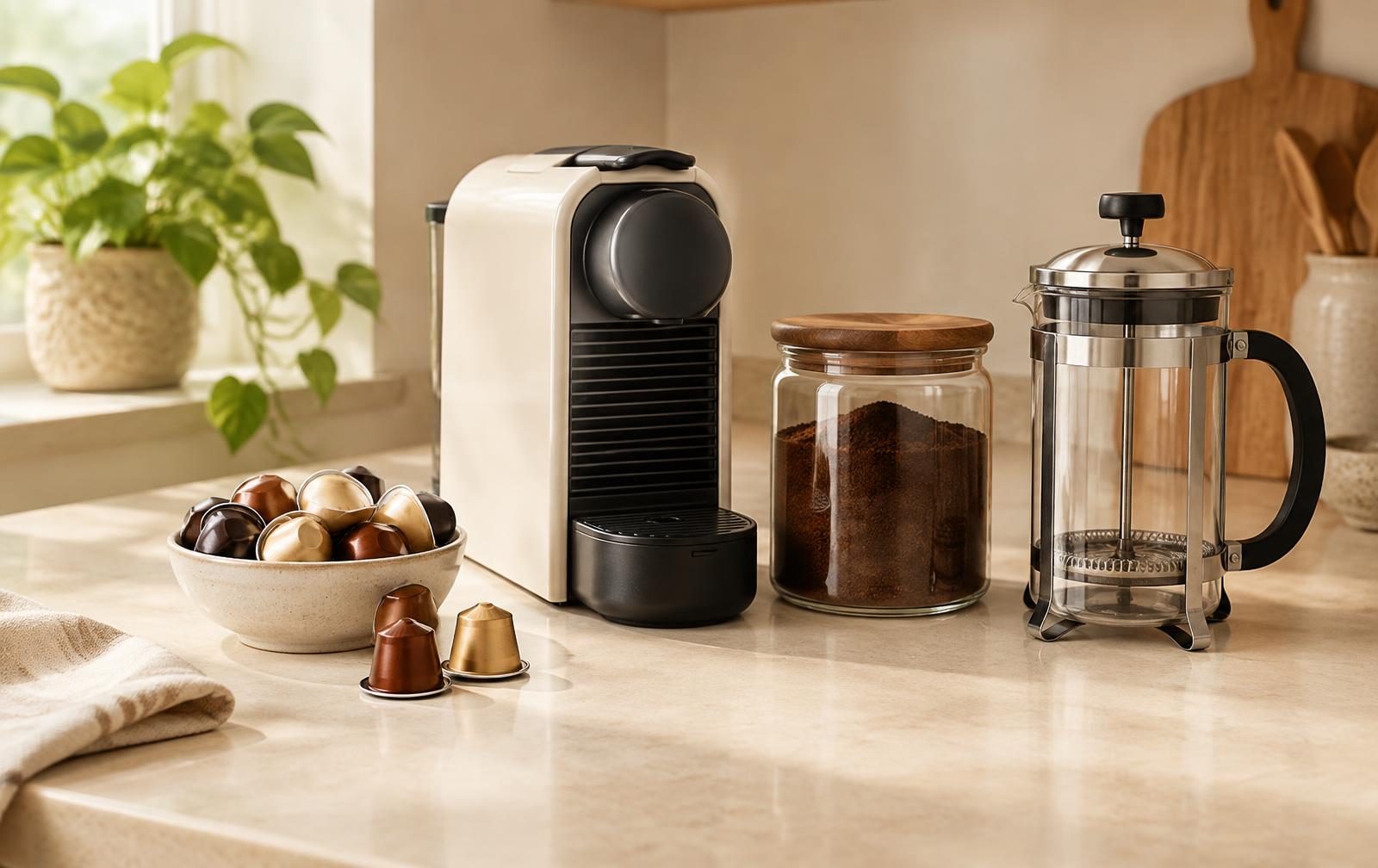
A pod or capsule coffee machine uses pre-portioned coffee sealed in a capsule or pod designed for a compatible machine. You insert the capsule, start the brew and dispose of the used capsule afterwards. Most systems are designed around speed, repeatability and minimal preparation.
Ground coffee is coffee beans that have already been ground. You can use it in several ways, including a cafetière, filter coffee maker, pour-over brewer or a compatible espresso machine. The equipment and technique vary, but you generally choose the coffee yourself and measure the amount you need.
These are not perfectly equivalent categories: pods describe a format, while ground coffee describes the form of the coffee. A pod machine may use a different brewing system from a cafetière or espresso machine. For a fair comparison, think about the complete setup you would use at home.
1. Cost Per Cup: Which Is Cheaper?
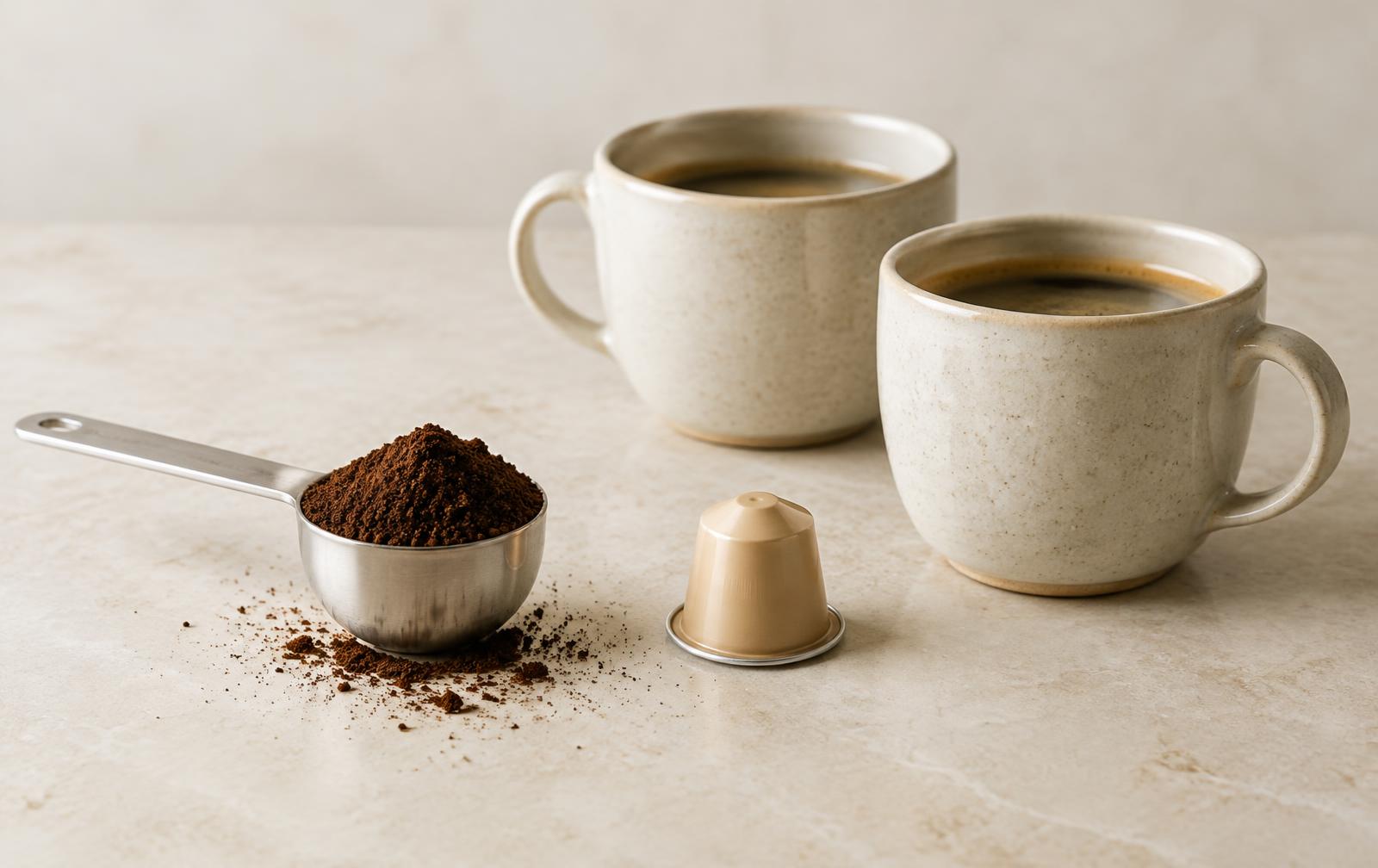
The cost of each cup is one of the biggest reasons people compare pods with ground coffee. Ground coffee often works out cheaper per serving than branded single-use capsules in independent consumer comparisons, but this is not a universal rule. Prices, compatible capsule options, coffee dose, drink size and waste all affect the result. Calculate it using the products and quantities you actually buy rather than relying on a headline average.
How to compare costs fairly
Use the same approach for both options:
- Coffee cost: Compare the price of the capsules you actually buy with the price and weight of your preferred ground coffee.
- Serving size: A large mug may use more coffee than a small espresso-style drink.
- Dose per drink: The amount of ground coffee used can change the cost of each serving.
- Waste: Spilled or unused ground coffee can increase the real cost; a capsule portions the coffee for you.
- Equipment: Include the cost of the machine and any accessories over the period you expect to use them.
A simple calculation is:
Cost per cup = cost of coffee used for the drink + any relevant consumables.
For ground coffee, divide the bag price by the number of servings you actually get from it. For capsules, divide the pack price by the number of capsules, then account for any extra ingredients such as milk.
For example, if a bag contains enough coffee for 40 drinks, divide its price by 40 to estimate the coffee cost per drink. If a capsule pack contains 10 capsules, divide the pack price by 10. Use the prices and serving counts for the products you really buy rather than relying on a generic claim about how much cheaper one method is.
Don't forget the machine
A low ingredient cost does not automatically make the whole setup cheaper. Include the initial machine price, replacement parts, cleaning products and any water filters or descaling products required. If you already own a machine, your next decision may be mostly about ongoing costs; if you're buying from scratch, compare the total cost of ownership.
Cost takeaway: Ground coffee can be economical, especially for regular coffee drinkers, but compare your own serving sizes and equipment costs before deciding.
2. Convenience and Speed
Convenience is where capsule systems often shine.
Pod machines
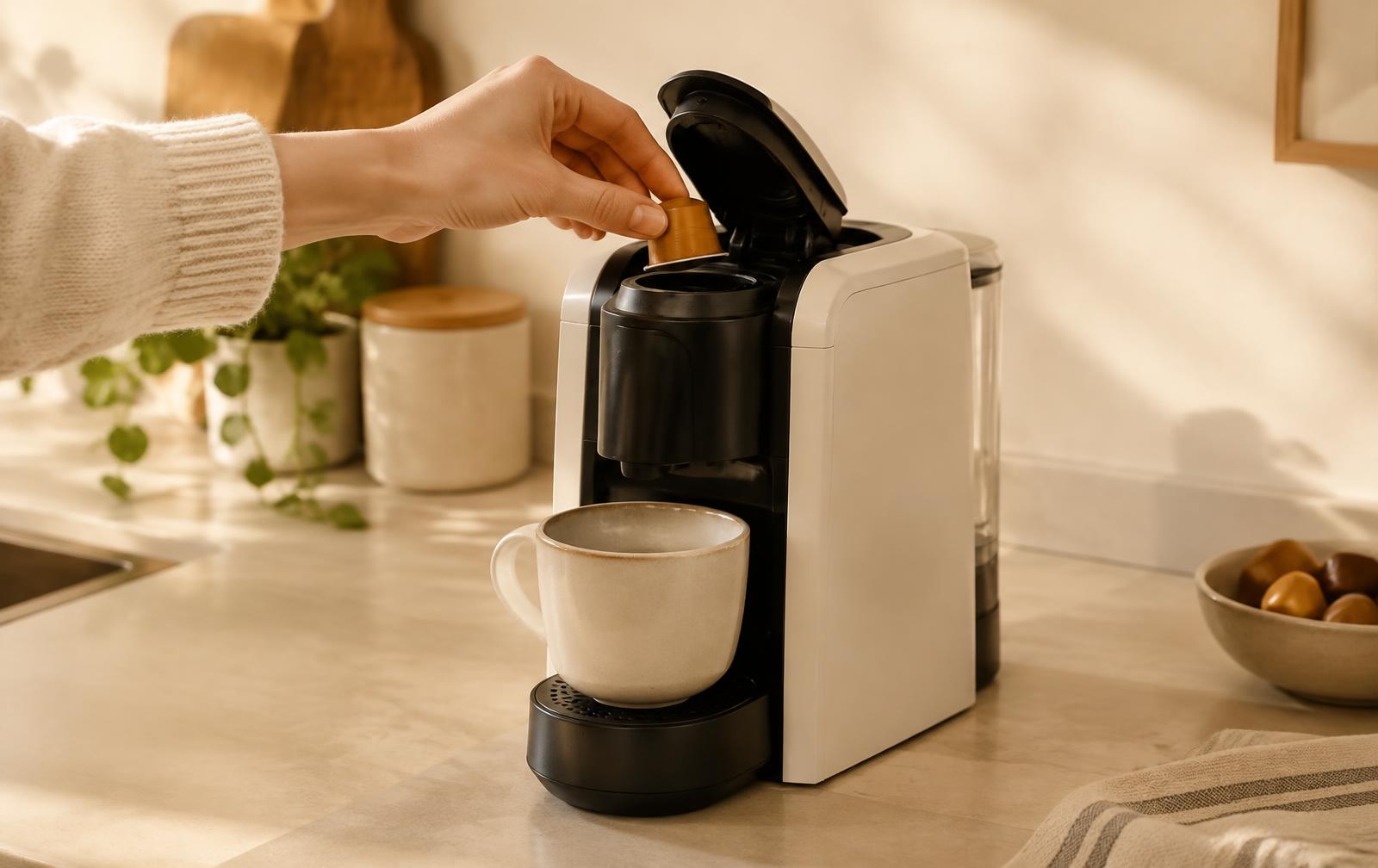
A capsule contains a pre-measured portion, so there is no need to weigh or scoop coffee for each drink. Many machines have a straightforward workflow: insert the capsule, press a button and remove the used capsule afterwards.
This can be particularly appealing in the morning, in a small kitchen or when different people in a household want a quick coffee without learning a brewing technique. The trade-off is that you need compatible capsules and must keep them in stock.
Ground coffee
Ground coffee gives you more flexibility, but the amount of effort depends on the brewing method. A filter machine can be easy to use for several cups at once. A cafetière requires measuring coffee, adding water and waiting for it to brew. Manual espresso preparation typically involves more steps.
Ground coffee is not necessarily slow. If you make a batch in a filter machine or establish a simple routine, it can be very convenient. Think about how you actually drink coffee: one quick cup at a time is different from making a pot for the household.
Best for the simplest single-cup routine: Usually a pod machine.
Best for flexibility across brewing methods and serving sizes: Ground coffee.
3. Taste, Freshness and Choice
Taste is personal, and neither option automatically produces better coffee.
Coffee pods
Capsules offer repeatable portions and can make it easy to prepare the same style of drink each time. The range of available coffees depends on the machine system and compatible capsule options. Some systems offer different strengths and drink styles, but your choices are limited to the formats and coffees that work with your machine.
Ground coffee
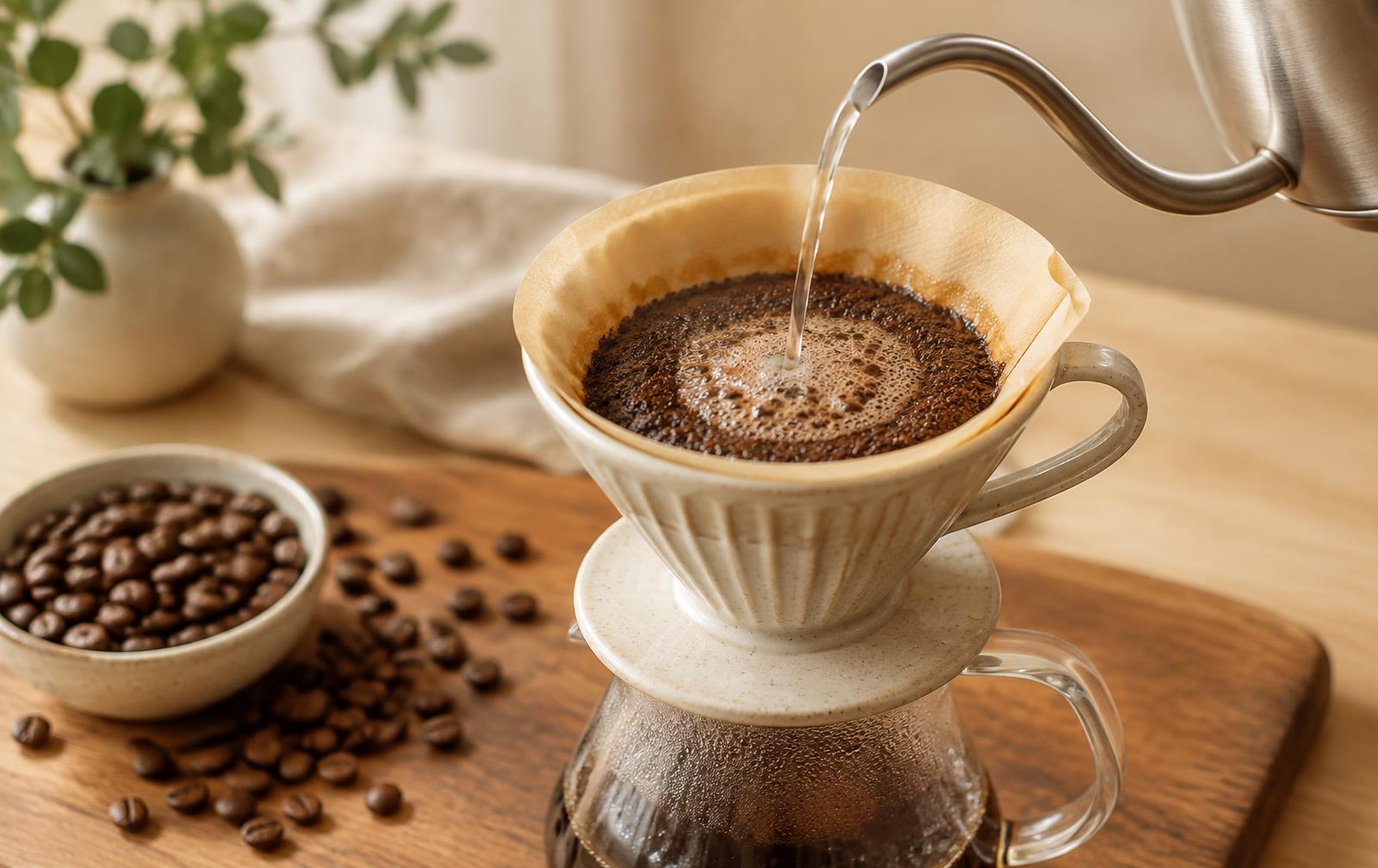
Ground coffee gives you a broad choice of roasts, origins, blends and grind styles. You can experiment with different coffees and brewing methods, and adjust the amount you use to suit your preferences.
Ground coffee is exposed to air after opening, so storage matters. Keep it sealed in a cool, dry place and follow the supplier's guidance. For the freshest flavour, buy a quantity you can use while it remains in good condition.
A key distinction is the brewing method. A cafetière, filter brewer and espresso machine produce different results even when using the same coffee. Make sure the grind is suitable for your chosen equipment.
Choose pods if you value repeatability and an easy routine. Choose ground coffee if you want more choice and enjoy adjusting your brew.
4. Waste and Environmental Considerations
Waste is more complicated than simply comparing a capsule with a spoonful of coffee grounds.
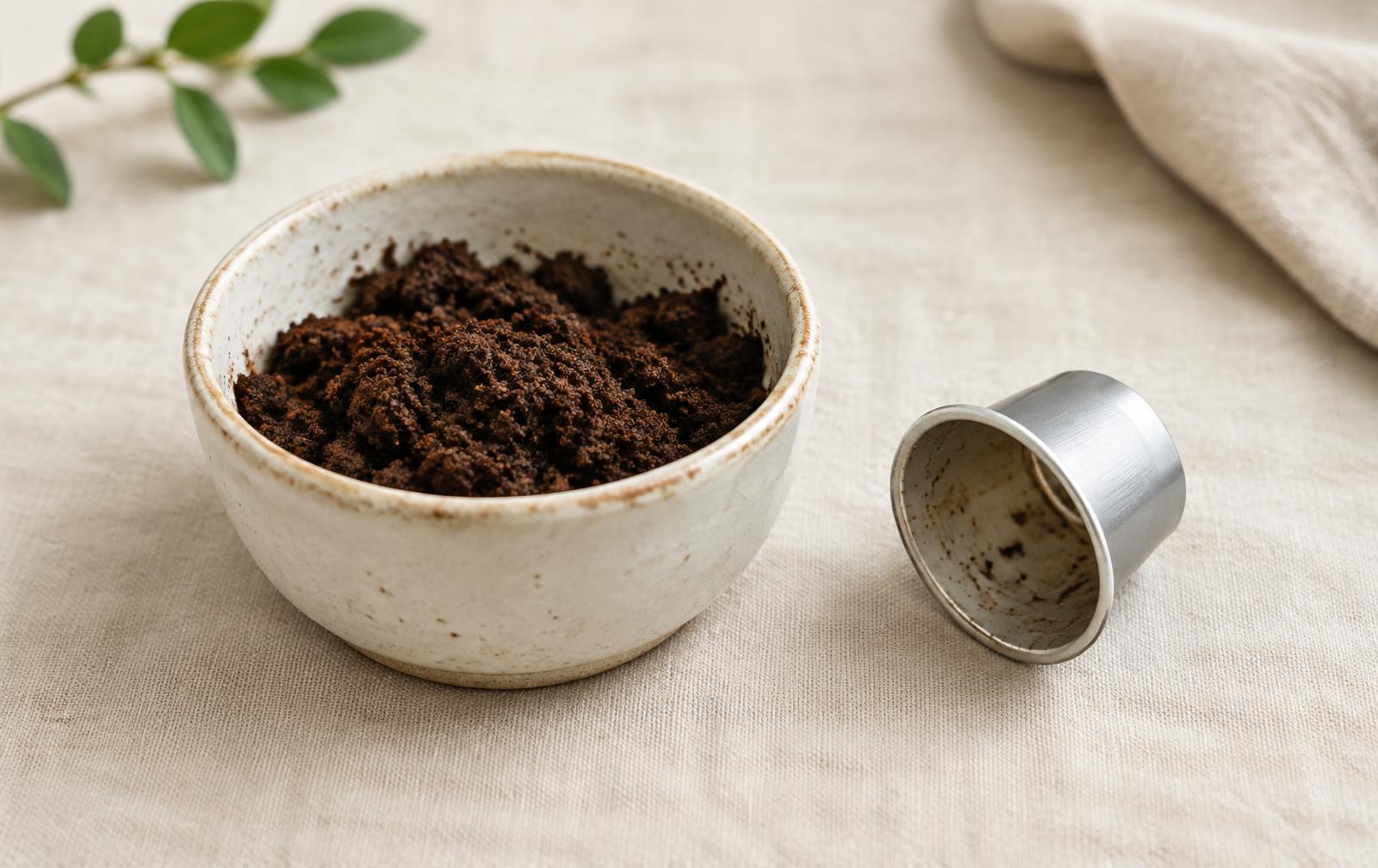
Used coffee grounds can often be composted where suitable facilities are available. Paper filters may also be compostable depending on the product and local arrangements. Capsule materials vary: some are aluminium, some are plastic and some use other materials or mixed components.
A capsule labelled recyclable is not necessarily accepted in your household recycling collection. Check the specific capsule maker's return scheme and your local council's guidance. In the UK, several capsule brands take part in the Podback scheme, which offers drop-off points and, in some council areas, kerbside collection using dedicated bags. Some brands also run their own return routes. Availability and accepted capsule types vary, so do not assume every capsule can go into the kerbside recycling bin.
Reusable capsules are another option for some pod machines. They can reduce the number of single-use capsules, but they need filling and cleaning, and compatibility and results vary. They may also make the routine less convenient than using pre-filled capsules.
Ground coffee can reduce packaging per serving when bought in larger bags, but packaging types and coffee sourcing differ. It is sensible to consider the entire product and disposal route rather than assuming one method is always better.
Waste takeaway: Check the actual materials, local recycling options and your own habits. Avoid assuming every capsule is recyclable or that every ground-coffee package has a lower environmental impact.
5. Cleaning and Maintenance
Both options require some cleaning, but the jobs differ.

Pod machine maintenance
You may need to empty the used capsule container, rinse the drip tray, clean the water tank and descale the machine as directed by the manufacturer. Capsule residue can accumulate, and some machines have removable components that need regular rinsing.
If you use a reusable capsule, you will also need to empty and wash it after each use. This adds a step compared with a disposable pre-filled capsule.
Ground coffee equipment
Maintenance depends on the brewing method. A cafetière needs its grounds removed and its filter and jug cleaned. A filter machine needs the basket and carafe washed. Espresso equipment requires more attention to the portafilter, basket, group head and grinder where one is used.
Do not put coffee grounds down the sink: water-company guidance warns that grounds can contribute to drain blockages. Put them in an appropriate food-waste or general-waste stream, or compost them where suitable and permitted by your local service.
Before buying equipment, check what cleaning is required and whether parts are easy to remove. A machine that is simple to maintain is more likely to fit into your everyday routine.
6. Equipment, Space and Flexibility
A compact pod machine can be a good fit for a small kitchen. It often has a relatively simple setup, although you will need storage space for capsules and room to remove the water tank and drip tray.
Ground coffee can work with inexpensive and compact equipment, such as a cafetière, or with a larger filter or espresso setup. If you already own a suitable brewer, the extra equipment cost may be minimal. If you want espresso with fine control, you may need a dedicated machine and possibly a grinder.
Ground coffee is also more flexible if your preferences change. You can switch between brewing methods and coffees without being tied to one capsule format. With pods, your choice is shaped by machine compatibility, although some systems offer a broad range.
Pod Machines vs Ground Coffee: At a Glance
| Feature | Pod or capsule machine | Ground coffee |
|---|---|---|
| Preparation | Usually quick and simple | Depends on brewing method |
| Portioning | Pre-measured capsule | You measure the dose |
| Coffee choice | Depends on compatible capsules | Broad choice of coffees and brewing methods |
| Ingredient cost | Depends on capsule price and drink | Can be economical in bags; depends on dose and coffee |
| Waste | Used capsules need correct disposal | Grounds may be compostable; packaging still matters |
| Cleaning | Drip tray, capsule container and descaling | Varies by brewer; espresso setups can need more care |
| Equipment flexibility | Tied to compatible capsule system | Works across compatible brewing methods |
| Best suited to | Fast, consistent single cups | Choice, flexibility and varied brewing styles |
Which Option Is Right for You?
A pod machine may suit you if:
- You want a quick cup with minimal preparation.
- You mostly make one drink at a time.
- You value repeatable portions.
- You have limited kitchen space.
- You are happy to buy compatible capsules and follow the appropriate disposal route.
Ground coffee may suit you if:
- You want a wider choice of coffees.
- You regularly make several cups at once.
- You want to compare and manage ingredient costs.
- You already own a cafetière, filter brewer or suitable espresso machine.
- You enjoy adjusting the strength, method or amount of coffee you brew.
There is also a middle ground. Some pod machines accept reusable capsules, while filter machines can make ground coffee with very little hands-on effort. The right choice is the one that balances your budget, taste preferences and daily routine.
Frequently Asked Questions
Are coffee pods more expensive than ground coffee?
They often cost more per serving than some ground coffees, according to independent consumer comparisons, but the difference depends on the products, dose, serving size and current prices. Compare the products you actually buy rather than treating this as a guaranteed outcome. Compare the actual price per drink and include the equipment and maintenance costs.
How do I calculate the cost per cup?
Divide the price of a bag of ground coffee by the number of servings you get from it. For capsules, divide the pack price by the number of capsules. Compare similar drink sizes and include any extra ingredients you use.
Is ground coffee better for the environment?
Not in every situation. Used grounds may be compostable, but packaging, coffee sourcing, brewing equipment and waste handling all matter. Check local recycling guidance and the materials used in your chosen products.
Can I use ground coffee in a pod machine?
Only if the machine is designed to accept a compatible reusable capsule or adapter. Do not put loose ground coffee directly into a machine's capsule chamber unless the manufacturer explicitly says it is supported.
Do reusable coffee capsules save money?
They may reduce the cost of buying pre-filled capsules if you use them regularly, but results depend on the reusable capsule's price, compatibility, the coffee you fill it with and how much effort you are willing to spend filling and cleaning it.
Which option is best for beginners?
A pod machine is usually straightforward for a beginner who wants a quick single cup. Ground coffee is also beginner-friendly when used with a cafetière or filter machine. Manual espresso brewing generally has a steeper learning curve.
Final Verdict: Convenience or Flexibility?
Pod machines are designed to make a single cup simple and consistent. They can be a practical choice if convenience is your top priority and you are comfortable with the ongoing cost and disposal of capsules.
Ground coffee offers greater choice and can provide good value, particularly if you make coffee regularly or already own suitable equipment. The amount of effort depends on the brewing method, so it does not have to mean a complicated routine.
Before deciding, compare your real cost per cup, think about how many drinks you make each day, and check the cleaning and waste arrangements for the equipment you prefer.
CoffeeMachineFinder.co.uk is being developed to help UK buyers understand their coffee-making options. Explore our guides and use the Coffee Machine Finder when available to identify the style of machine that fits your needs.
Sources and Further Reading
General background used when preparing this guide. These sources do not endorse CoffeeMachineFinder.co.uk, and we have not tested machines ourselves. Prices and recycling arrangements change, so check current details before buying.